
Service
Verruca Treatment
Verrucae are one of the most common foot complaints we see at West Bridgford Podiatry, and one of the most frequently mismanaged. Many patients spend months applying over-the-counter treatments without success before seeking professional help, by which point the verruca may have grown, spread, or become increasingly painful. Our experienced team of HCPC-registered Podiatrists and Foot Health Practitioners offers a range of clinically proven verruca treatments, tailored to your individual circumstances, the size and nature of your verruca, and your personal tolerance for treatment.
We welcome patients from West Bridgford, Nottingham, and the wider area, including the NG1, NG3, NG4, NG5, and NG12 postcodes.
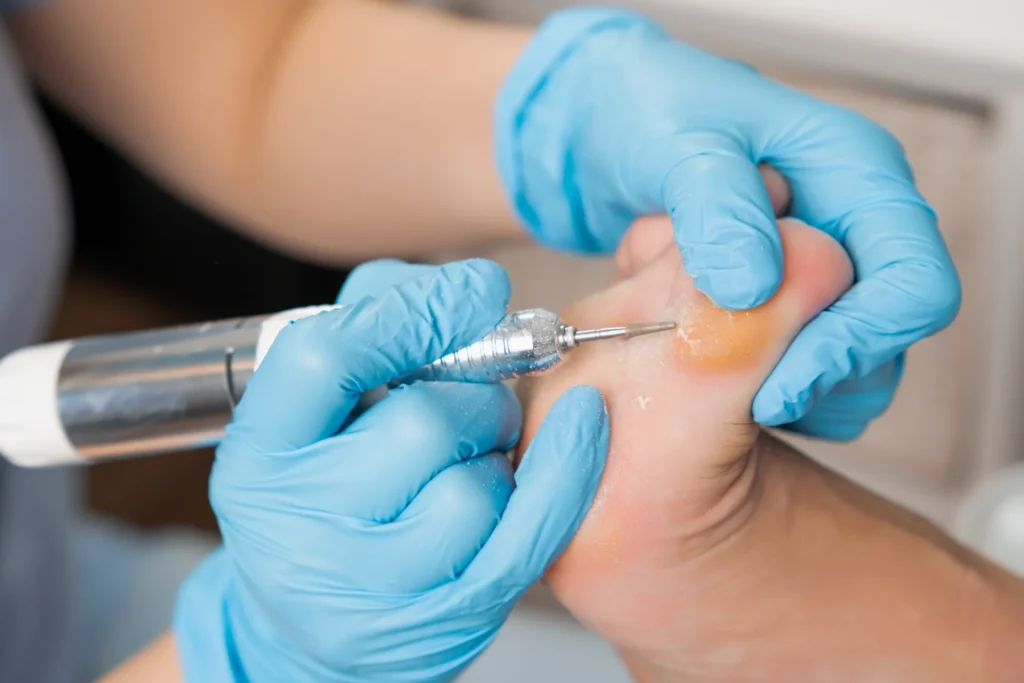
Verruca Treatment
What Are Verrucae?
Verrucae are plantar warts caused by the Human Papilloma Virus (HPV). They occur on the soles of the feet or around the toes and can range from a single small growth to a spreading cluster covering a broader area of the plantar surface. The HPV virus thrives in warm, moist environments such as swimming pool changing rooms, communal showers, and sports changing facilities, where it spreads through direct or indirect contact with contaminated surfaces.
The condition is most commonly seen in children, teenagers, and young adults who use shared changing areas regularly, though adults of any age can be affected. The body’s immune system will often clear the infection naturally over time, a process that can take six months in children and up to two years or more in adults. For painful, spreading, or persistent verrucae, professional treatment offers a more reliable and faster route to resolution.
How Do I Know If I Have a Verruca?
Verrucae can sometimes be confused with corns or other plantar lesions. Common signs include:
- A small, rough, cauliflower-like growth on the sole of the foot or around the toes
- Tiny black dots visible within the surface, which are small, thrombosed blood vessels
- Pain when the area is pinched from the sides rather than pressed directly from above
- A disruption of the normal skin ridge pattern over the affected area
- Hard skin (callus) forming over the surface of the growth
- Multiple small warts merging into a larger cluster, known as a mosaic verruca
If you are unsure whether you have a verruca or another skin lesion, please seek a clinical assessment. Our team at West Bridgford Podiatry will confirm the diagnosis before any treatment is recommended or commenced.
Related Services and Conditions
Verrucae often develop a layer of overlying callus that requires debridement before treatment can be effective. This is addressed as part of our Routine Foot Treatment service. If you are unsure whether your skin concern is a verruca, a corn, or another condition, please visit our Corn and Callus and Verruca condition pages for further guidance.
Evidence and Clinical Standards
Verruca treatment at West Bridgford Podiatry follows the standards established by the HCPC and the Royal College of Podiatry. Our clinicians assess each verruca individually, discuss the most appropriate treatment options, and provide realistic expectations regarding outcomes before any treatment begins. We are transparent with every patient about the fact that no verruca treatment carries a guarantee of success, as outcomes depend significantly on the individual’s immune response to HPV.
Who We Help
Our verruca treatment service is most appropriate for:
- Children and young people with painful or spreading verrucae
- Adults whose verrucae have not responded to extended courses of pharmacy treatments
- Patients with plantar warts on weight-bearing areas causing significant discomfort
- Athletes and active individuals requiring a targeted treatment plan to minimise disruption to training
- Anyone seeking a professional assessment and clear, evidence-based advice on their options
Getting to Us
Our clinic is located at 7 Musters Road, West Bridgford, Nottingham, NG2 7PP, close to Trent Bridge cricket ground. We are well served by local bus routes connecting West Bridgford with Nottingham city centre, and free on-site parking is available at both the front and rear of the building. We are open Monday to Friday from 8:00am to 6:00pm and on alternate Saturdays from 8:00am to 1:00pm.
Our Verruca Treatment Options
Verrutop
Verrutop is a clinically advanced treatment that works differently from traditional acid or freezing therapies. Rather than burning or freezing the tissue, Verrutop destroys the viral protein within the verruca and dries out the wart tissue, which then separates naturally from the healthy skin beneath. This approach is particularly well suited to children and patients who find more invasive treatments difficult to tolerate, as it causes considerably less discomfort than cryotherapy or acid application.
Verrutop is applied in a maximum of six treatment sessions, with an interval of two to three weeks between each application. After the sixth session, a twelve-week rest period is observed before a formal clinical review takes place. As with all verruca treatments, outcomes depend on the individual’s immune response and cannot be guaranteed.
Silver Nitrate
Cryotherapy
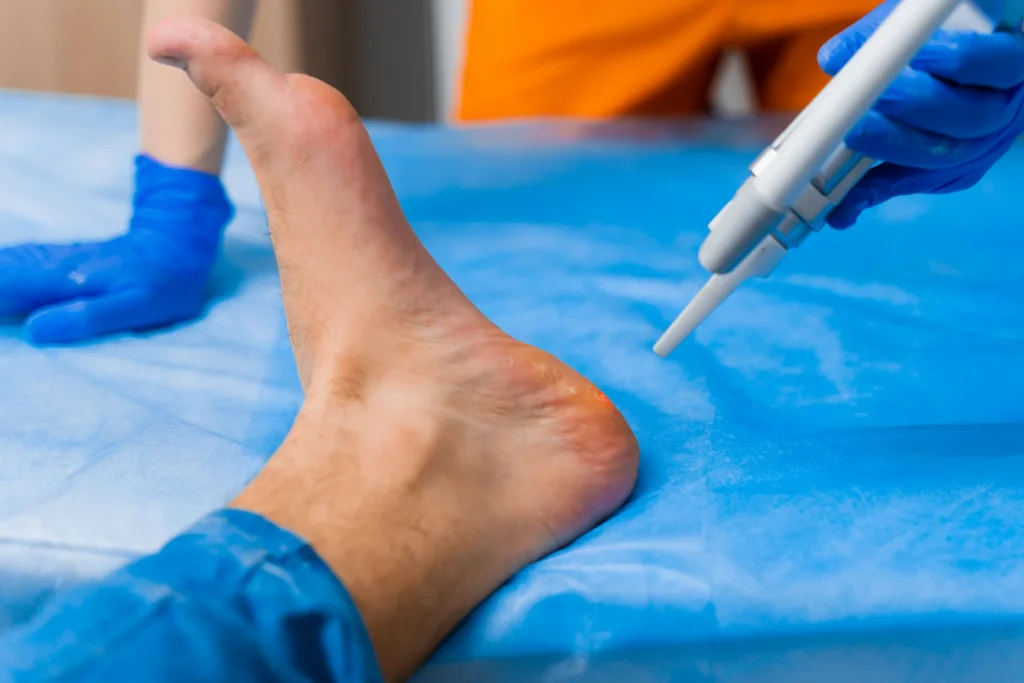
Cryotherapy involves the application of extreme cold to destroy verruca tissue. At West Bridgford Podiatry, we use medical-grade cryotherapy equipment, which is substantially more effective than the aerosol products available in pharmacies. The treatment is brief and, whilst it can cause a temporary stinging or burning sensation, it is generally well tolerated by patients.
Meet the Team
Meet Our Team
Verruca treatment at West Bridgford Podiatry is provided by Hassan Ebrahim Isat, Iqra Rafiq, Jaykishan Maru, and Zoe Foster.
Pricing and Insurance
Appointment Type | Duration | Fee |
Initial Appointment | Up to 45 minutes | £70 |
Follow-Up / Treatment Session | Up to 30 minutes | £60 |
We accept referrals from AXA Health, Aviva, Vitality, and WPA. Please confirm your policy covers podiatry before booking.
Faqs
Frequently Asked Questions
How many sessions will I need?
This varies depending on the size, depth, duration, and location of the verruca, as well as your immune response. Verrutop requires a maximum of six sessions. Silver Nitrate and cryotherapy may also require a course. Your clinician will outline a realistic plan at your first appointment.
Is verruca treatment painful?
This depends on the treatment chosen. Verrutop is generally comfortable and well tolerated, making it a good option for children. Cryotherapy causes a temporary stinging sensation. Silver Nitrate treatment typically involves minimal discomfort. Your clinician will discuss what to expect for each option before proceeding.
Can verrucae spread to my family?
Yes. HPV is contagious through direct and indirect contact. To reduce the risk of spreading the virus, keep the verruca covered with a plaster in communal areas, avoid sharing towels or footwear, and seek treatment promptly if the verruca is growing or multiplying.
Can I have treatment if I am pregnant?
Please inform your clinician if you are pregnant before treatment begins. Some treatments may not be suitable during pregnancy. Your clinician will discuss the safest available options with you.
Is there a guarantee that treatment will work?
No verruca treatment can be guaranteed, as outcomes depend significantly on your immune response to the HPV virus. We will always be transparent with you about the realistic likelihood of success for each treatment and will work with you to find the most appropriate approach.
Should I cover my verruca between appointments?
Yes. Covering the verruca with a plaster between sessions helps to reduce the risk of spreading the virus to other areas of your foot or to other people. Your clinician will advise on the best approach for your circumstances.