Achilles Tendinopathy
What Is Achilles Tendinopathy?
The Achilles tendon is the large cord-like structure connecting the calf muscles to the heel bone. It transmits the force generated by the calf during walking, running, and jumping. Achilles tendinopathy describes a degenerative change within the tendon tissue caused by cumulative overloading beyond the tendon’s capacity to repair itself. It is distinct from acute Achilles tendinitis, though both involve pain and dysfunction of the same structure.
Tendinopathy most commonly affects either the mid-portion of the tendon, approximately two to six centimetres above the heel, or the insertion point where the tendon meets the heel bone. These two presentations have different biomechanical causes and require different management approaches, making accurate clinical assessment essential.
Signs and Symptoms
Achilles tendinopathy typically presents with:
- Pain and stiffness at the back of the heel or lower calf, often worst in the morning
- Pain that eases with gentle activity but worsens with sustained or high-intensity loading
- Visible or palpable thickening of the tendon
- Localised tenderness when the tendon is pressed
- Reduced calf strength or power on the affected side
- A grating or creaking sensation during ankle movement in some cases
What Causes Achilles Tendinopathy?
The condition is typically multifactorial. Contributing factors commonly include:
- A rapid or significant increase in training load or intensity
- Excessive pronation placing rotational load on the tendon during gait
- Tightness or inflexibility in the calf musculature
- A sudden reduction in footwear heel height, such as switching from heeled shoes to flat trainers
- Running on hard or uneven surfaces without adequate footwear support
- Previous Achilles injury reducing the tendon’s structural resilience
- Age-related changes in tendon tissue properties reducing its tolerance to load
How We Treat Achilles Tendinopathy
Management at West Bridgford Podiatry is tailored to the specific location and severity of your tendinopathy:
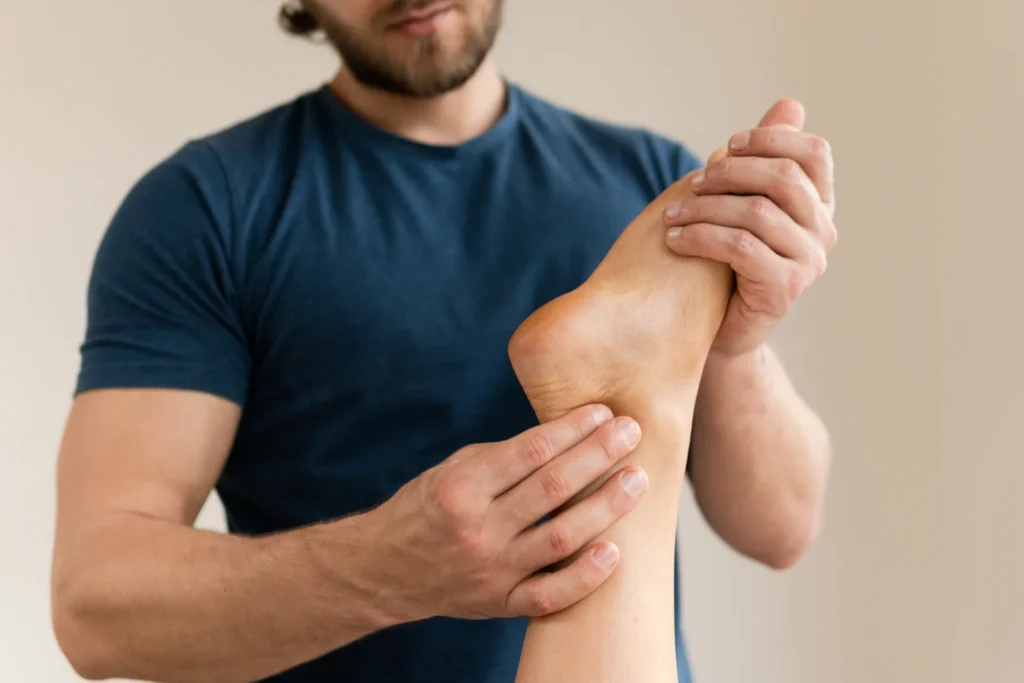
- Biomechanical assessment to identify gait-related contributors, including pronation and calf flexibility
- Footscan gait analysis to objectively quantify loading patterns during walking
- Heel raises or orthotics to reduce tendon load during the symptomatic phase
- Footwear advice ensuring appropriate heel height, support, and cushioning
- Referral to physiotherapy for an evidence-based progressive tendon loading programme
- Activity modification guidance to support recovery without unnecessary deconditioning
Getting to West Bridgford Podiatry
7 Musters Road, West Bridgford, Nottingham, NG2 7PP. Close to Trent Bridge, served by local bus routes, with free on-site parking front and rear. Open Monday to Friday 8:00am to 6:00pm and alternate Saturdays 8:00am to 1:00pm.
Faqs
Frequently Asked Questions
How long does Achilles tendinopathy take to resolve?
Achilles tendinopathy is notoriously slow to heal, and patients should expect a recovery period of three to six months or longer. Consistency with the rehabilitation programme is the single most important factor in achieving a successful outcome.
Should I stop running?
A period of reduced load is often beneficial in the early stages, but complete rest is rarely the optimal approach. Continuing to move within pain limits can support tendon adaptation. Your clinician will advise on appropriate activity levels and how to progress loading safely.
Is insertional Achilles tendinopathy different from mid-portion?
Yes. Insertional tendinopathy occurs where the tendon attaches to the heel bone and requires different management from mid-portion tendinopathy. Certain exercises helpful for mid-portion presentations can aggravate insertional cases. Accurate assessment is critical.
Can orthotics help?
Yes. A heel raise or anti-pronation orthotic can reduce rotational and tensile load on the Achilles tendon during walking. Orthotics are most effective as part of a broader plan that includes progressive loading exercises.