
Service
Biomechanical Assessment
Pain in the feet, knees, hips, or lower back is rarely a simple, isolated problem. More often, it is the visible result of a structural or functional issue somewhere within the lower limb kinetic chain, where a problem in the foot creates compensatory strain higher up the body. A biomechanical assessment gives us the detailed clinical picture we need to identify those underlying causes and build a personalised, effective treatment plan. At West Bridgford Podiatry, our Lead Podiatrist Hassan Ebrahim Isat combines advanced computerised gait analysis technology with thorough manual clinical assessment to deliver a precise and meaningful evaluation.
We serve patients from West Bridgford, Nottingham, and across Nottinghamshire, including the NG1, NG3, NG4, NG5, and NG12 postcode areas.
Biomechanical Assessment
What Is a Biomechanical Assessment?
A biomechanical assessment is a structured clinical evaluation of the lower limbs, examining their structure, alignment, strength, flexibility, and the way they function during movement. The foot alone contains 33 bones, 214 ligaments, and 38 muscles, and the way these structures interact during walking and other activities has profound implications for the health of the entire lower limb and lower back.
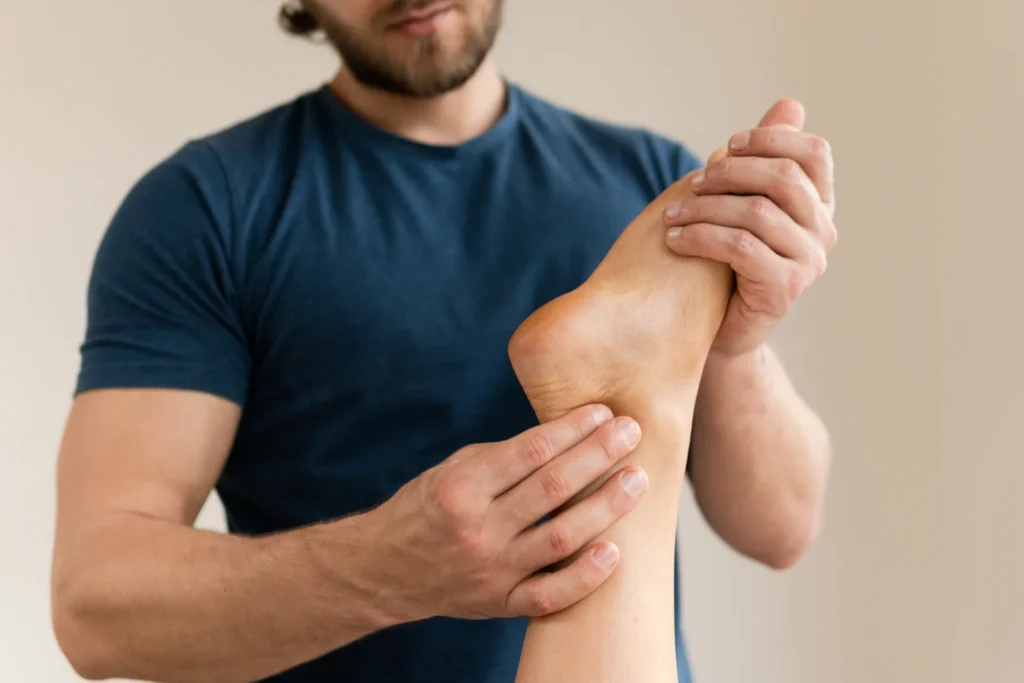
At West Bridgford Podiatry, our assessment goes beyond the foot. We examine the pelvis, legs, and knees alongside the foot and ankle, assessing the relationships between them and identifying where dysfunction or weakness may be contributing to your pain or injury. This whole-system perspective is central to the accuracy and effectiveness of our assessments.
Conditions We Assess and Help With
A biomechanical assessment is appropriate for a wide range of musculoskeletal and lower limb conditions, including:
- Plantar fasciitis and heel pain
- Achilles tendinopathy and Tibialis posterior tendinitis
- Foot pain including arch, heel, and forefoot pain
- Shorter Leg – Limb Length Discrepancy
- Ankle pain and chronic ankle instability
- Knee pain and patellofemoral syndrome
- Hip pain and lower back pain
- Sciatica
- Morton’s neuroma
- Flat feet (pes planus) and high arches (pes cavus)
- Ball of the foot pain (metatarsalgia)
- Bunions and hallux abducto valgus
- Hallux rigidus
- Overlapping toes
- Gout affecting the foot and ankle
- Pronation and supination abnormalities
- Pain in runners, cyclists, and athletes
What Happens During Your Assessment?
Your biomechanical assessment with Hassan Ebrahim Isat follows a structured and comprehensive pathway:
- Clinical History: Your podiatrist will take a detailed history of your pain or injury, including how long it has been present, what makes it worse or better, and what treatments you have already tried. Understanding the full history is fundamental to accurate diagnosis.
- Joint and Muscle Testing: A series of manual tests are carried out to evaluate the quality and range of motion in your joints and the strength and flexibility of your muscles throughout the lower limbs.
- Computerised Gait Analysis: You will walk across our RSscan Footscan pressure plate, which captures detailed data about how your feet contact the ground, including pressure distribution, timing sequences, and any asymmetries in your gait pattern.
- Results Review and Recommendation: Your podiatrist will discuss the findings with you in plain terms, explain what they mean for your condition, and outline the recommended treatment pathway, whether that is footwear advice, prefabricated insoles, custom 3d Phits orthotics, physiotherapy referral, or a combination of these approaches.
How Long Does an Assessment Take?
Please allow up to 60 minutes for your biomechanical assessment. This allows sufficient time for a thorough history, all physical tests, the computerised gait analysis walkthrough, and a meaningful discussion of your results and treatment options before you leave the clinic.
Evidence and Clinical Standards
Our biomechanical assessment service follows the standards published by the HCPC and the Royal College of Podiatry. Computerised gait analysis using pressure plate technology is an established, evidence-informed approach to understanding foot mechanics and guiding orthotic prescription. The Footscan system by RSscan is one of the most widely used and clinically validated pressure plate platforms in podiatry practice internationally.
Who We Help
A biomechanical assessment is particularly well suited to:
- Runners, cyclists, Golfers,walkers and athletes experiencing recurring lower limb injuries
- Individuals with one leg shorter.
- Individuals with persistent heel, arch, or forefoot pain that has not resolved with standard approaches
- People who stand on their feet for extended periods at work and are experiencing lower limb discomfort
- Patients with flat feet or high arches causing secondary pain in the knees, hips, or lower back
- Anyone who has noticed a change in the way they walk or who is concerned about their gait pattern
Getting Here
West Bridgford Podiatry is located at 7 Musters Road, West Bridgford, Nottingham, NG2 7PP. We are close to Trent Bridge cricket ground and easily accessible by local bus routes from Nottingham city centre and the surrounding area. Free on-site parking is available at both the front and rear of the building. We are open Monday to Friday from 8:00am to 6:00pm and on alternate Saturdays from 8:00am to 1:00pm.
Pricing and Insurance
| Appointment Type | Duration | Fee |
| Biomechanical Assessment | 60 minutes | £120 |
We accept referrals
Faqs
Frequently Asked Questions
What is the difference between a biomechanical assessment and a standard podiatry appointment?
A routine podiatry appointment focuses on treating conditions of the skin and nails. A biomechanical assessment is an in-depth clinical evaluation of how the structure and function of your lower limbs may be contributing to pain, injury, or dysfunction. It includes physical testing, computerised gait analysis, and a detailed discussion of findings and treatment options.
Will I definitely need orthotics after my assessment?
Not necessarily. Following assessment, some patients are advised on footwear changes alone or referred to physiotherapy for strengthening work. Orthotics are only recommended when the clinical findings indicate they will provide genuine benefit for your specific presentation.
What should I bring to my assessment?
Please bring the footwear you wear most regularly, including sports shoes if you are being assessed for a sport-related complaint. Wearing shorts or bringing a pair is helpful, as your podiatrist will need access to your lower legs during the physical examination.
Is a biomechanical assessment suitable for children?
Yes. Children presenting with flat feet, in-toeing, out-toeing, or persistent growing pains may benefit significantly from a biomechanical assessment. Please contact the clinic to discuss whether this is the right approach for your child.
Can a biomechanical assessment help with knee or back pain?
Yes. Because the lower limb functions as a kinetic chain, a structural problem in the foot can create compensatory strain in the knee, hip, or lower back. Addressing foot mechanics through orthotics or footwear advice can significantly reduce pain experienced elsewhere in the body.