Ingrowing Toenails
What Causes an Ingrown Toenail?
Ingrown toenails most frequently affect the big toe and develop when the side of the nail curves downward and cuts into the skin of the nail fold. Contributing factors include:
- Incorrect nail cutting technique, particularly cutting nails too short or rounding the corners
- A naturally curved or involuted nail shape
- Tight-fitting or narrow footwear compressing the toe
- Trauma causing nail distortion or damage
- Hyperhidrosis softening the nail fold and making it more susceptible to penetration
- Genetic predisposition to involuted nail curvature
Signs and Symptoms
Common signs of an ingrown toenail include:
- Persistent pain and tenderness along one or both sides of the affected nail
- Redness, warmth, and swelling of the nail fold
- The development of hypergranulation tissue: raised, red, fleshy tissue at the nail edge
- Discharge or weeping from the nail fold, indicating bacterial infection
- Difficulty wearing footwear due to pressure on the affected toe
How We Treat Ingrown Toenails
Conservative Treatment
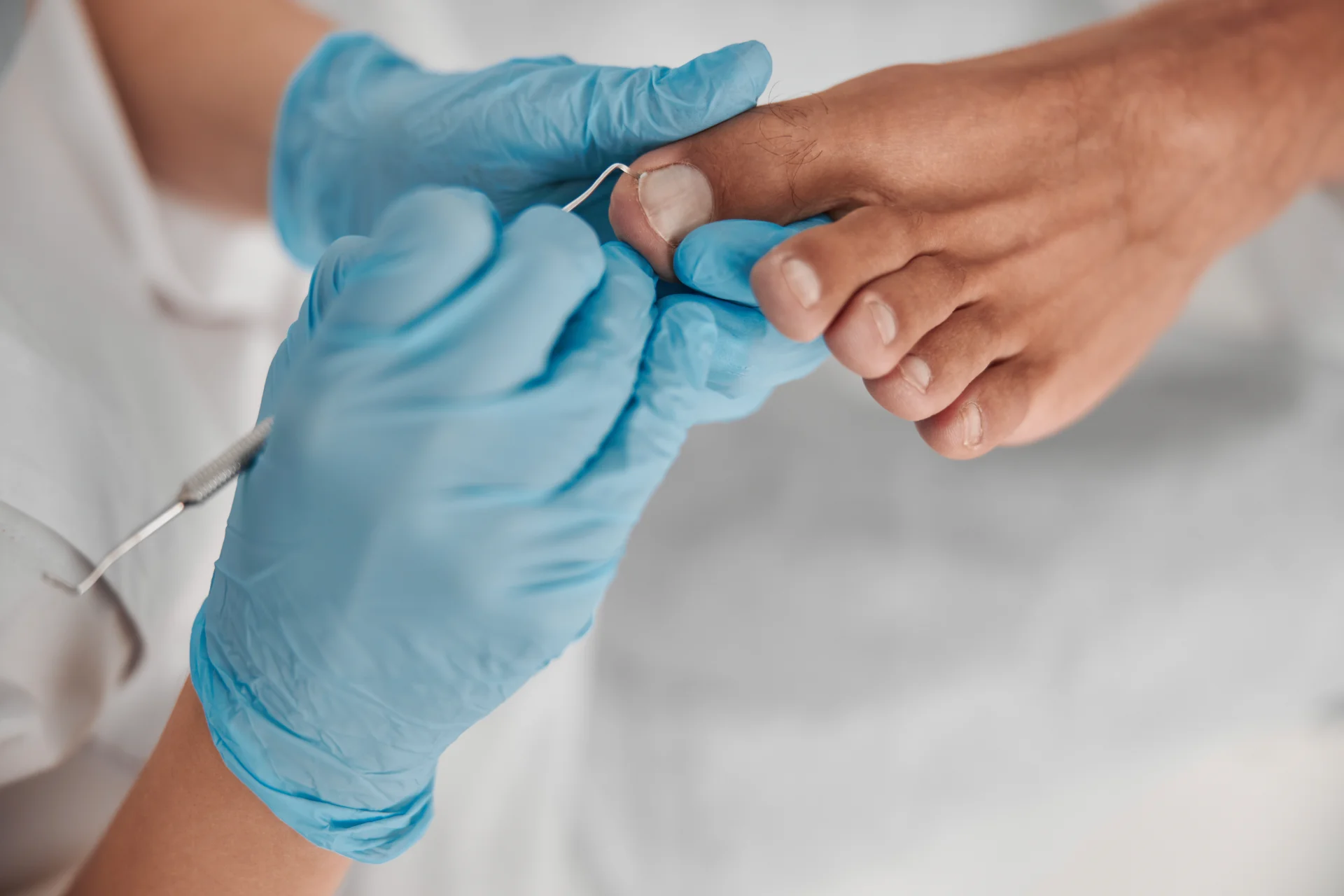
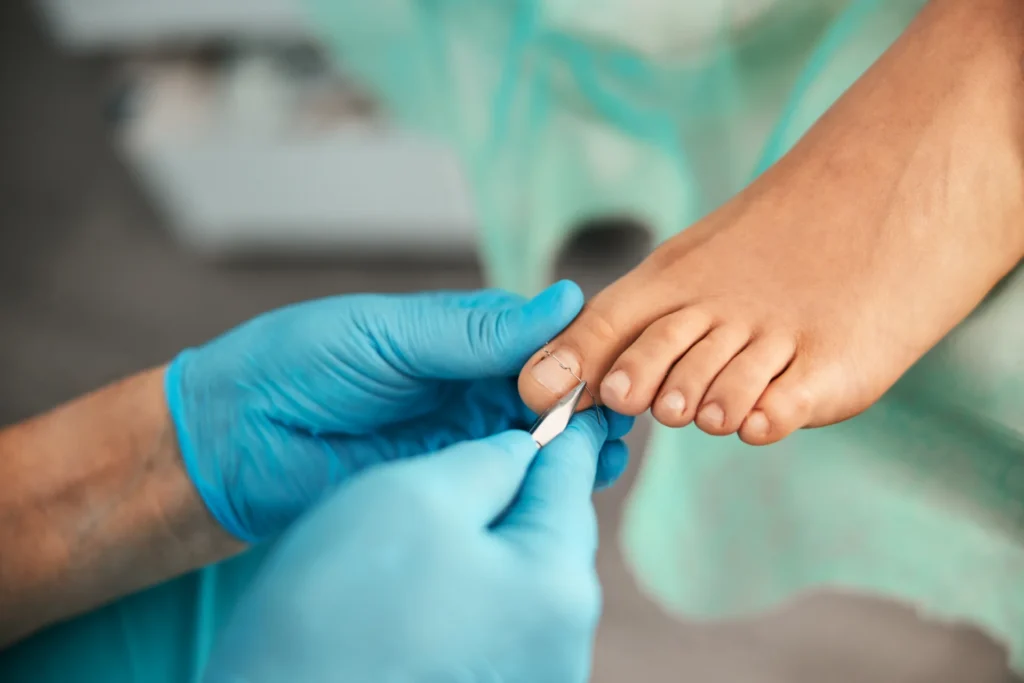
For early-stage ingrown toenails without established infection, conservative management is the first approach. This involves the skilled removal or reshaping of the offending nail edge by a podiatrist, followed by advice on correct nail cutting technique, appropriate footwear, and self-care to reduce the risk of recurrence. This is offered as part of our Routine Foot Treatment or as a dedicated conservative management appointment.
Surgical Treatment
Where conservative management has not been successful, or where the condition is recurrent or associated with significant infection or hypergranulation tissue, nail surgery is recommended. At West Bridgford Podiatry, Hassan Ebrahim Isat performs nail surgery under local anaesthetic, removing the offending nail section and applying phenol to the exposed nail matrix to permanently prevent regrowth. The procedure achieves a permanent outcome in 97% of cases.
Faqs
Frequently Asked Questions
Should I see a podiatrist or a GP?
A podiatrist is the specialist best placed to manage ingrown toenails, both conservatively and surgically. You do not need a GP referral to book at West Bridgford Podiatry. If your toe is severely infected, your GP may need to prescribe antibiotics before surgical treatment can safely proceed.
Can I treat an ingrown toenail at home?
Soaking in warm salt water and keeping the area clean can provide some temporary relief. However, attempting to remove the nail edge yourself significantly increases the risk of infection and is not recommended. A podiatrist can address the nail edge safely and effectively.
Will my nail look normal after surgery?
Following partial nail avulsion with phenolisation, the remaining nail grows normally and can appear cosmetically acceptable over time. The treated edge does not regrow. Following total nail avulsion, the nail does not regrow from the treated matrix.
How should I cut my toenails to prevent ingrown toenails?
Cut toenails straight across, following the natural contour of the nail, and do not cut them too short. Avoid rounding the corners or digging into the nail sulcus. Regular, careful cutting to maintain an appropriate length is important.